- Home
- Blog
- Hearing Protection
- Year-End Noise & Communication Checkup: 5 Questions Every Safety Manager Should Ask Before 2026
Year-End Noise & Communication Checkup: 5 Questions Every Safety Manager Should Ask Before 2026
National Why a Year-End Checkup Matters
For many industrial sites, noise exposure and communication tools only get reviewed when something goes wrong, such as a near miss, a complaint, or a failed audit. Yet noise-induced hearing loss (NIHL) remains one of the most common work-related illnesses worldwide. Unaddressed hearing loss is estimated to cost the global economy close to 1 trillion US dollars every year.
The good news is that NIHL is 100% preventable when noise is controlled and hearing protection is selected, fitted, and used correctly. A short, structured noise and communication checkup before year-end can help you spot gaps now and build a stronger, data driven plan for 2026.
This article walks through five practical questions to guide that review, focusing on noise hotspots, communication failures, dual protection, and overall program readiness. At each step, you will also see how Sensear high-noise communication headsets and in-ear solutions can help you close the gaps you find.
Q1: Where Are Your Real Noise Hotspots Today?
Short answer: Start with current data, not assumptions. Map where, when, and how long workers are exposed above safe limits, then align controls and hearing protection to those exposures.
Most safety teams have a general sense of their “loudest” areas, but conditions change. New lines come online, aircraft types change, data halls fill up, overtime and shutdowns increase exposure hours, and suddenly yesterday’s map does not match today’s risk.
What to review:
- Recent noise surveys or dosimetry reports
- Changes in processes or layouts that may have increased noise
- Non-routine work such as shutdowns, maintenance, turnarounds, and construction
The National Institute for Occupational Safety and Health (NIOSH) recommends limiting worker noise exposure to 85 dB(A) as an 8-hour time-weighted average (TWA). Exposures at or above this level are considered hazardous and call for hearing conservation measures.
If you have not updated exposure data in the last 12 to 18 months, or if your operation has changed significantly, year-end is the right time to schedule new measurements or dosimetry.
Practical prompts:
Ask yourself and your team:
- Do we have current data on average and peak noise levels in our highest risk areas?
- Can we quickly identify which roles (not just locations) are most at risk?
- Are we confident that temporary workers and contractors are included in our assessments?
Where Sensear helps:
Once you understand the noise profile, you can match it to a specific level of protection and communication capability. Sensear headsets and in-ear solutions are designed for high-noise environments with:
- Standard headsets that provide 23 to 27 dB NRR (30 to 33 dB SNR) attenuation
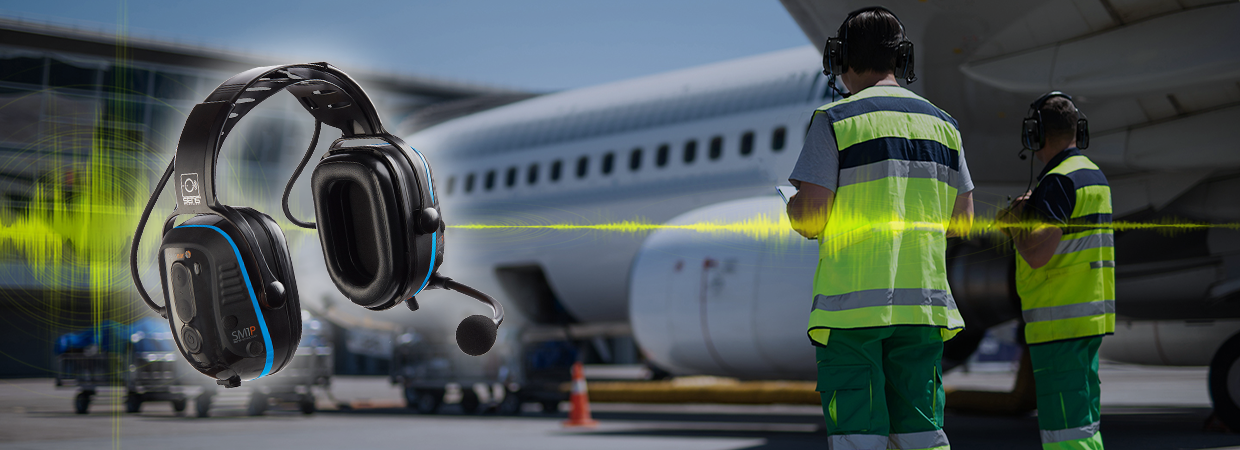
- Dual protection headsets that can deliver up to 36 dB NRR (38 dB SNR) of protection while still enabling communication and 360º situational awareness
Tools such as the Sensear Headset Selector and Hearing Protection Calculator can help you translate noise data into a recommended device for each role on site.
Q2: Are Workers Actually Hearing Each Other When It Matters?
Short answer: If people are shouting, repeating themselves, or missing critical instructions, you do not just have a communication issue. You have a safety issue.
Noise is not only a threat to hearing. It also interferes with the information workers need to stay safe and productive. Communication failures can appear as:
- Near misses because instructions were not heard or understood
- Workers stepping into harm’s way because they could not hear alarms, horns, or spotters
- Radio traffic that is garbled, cut off, or drowned out by background noise
What to listen for:
During your checkup, talk to supervisors and frontline workers:
- Where do instructions most often get lost? Loading docks, tunnels, ramps, around engine rooms, or maintenance bays, for example.
- Which tools fail most often? Hand signals, radios, overhead paging, basic earmuffs, and so on.
- Do workers feel they must lift earmuffs or remove earplugs to hear clearly?
Behavior such as “lifting the cup to hear” or “slipping one earplug out” is a clear sign that current PPE is forcing workers to choose between hearing and protection.
Where Sensear helps:
Sensear solutions are built to remove that trade-off. SENS® Technology allows workers to:
- Hear speech and critical sounds from all directions
- Reduce harmful background noise to safe levels
- Maintain complete awareness of vehicles, alarms, and process sounds
At the same time, Sensear headsets and in-ear devices can integrate with:
- Two-way radios
- Bluetooth® wireless technology devices
- FM short-range headset-to-headset communication
That means you can standardize on one solution for hearing protection and communication instead of juggling separate radios, earplugs, and ad hoc workarounds.
Q3: Who Needs Dual Hearing Protection, and Are They Getting It Right?
Short answer: Double protection or dual protection (earplug plus earmuff) should be standard wherever exposures can exceed about 100 dB(A) over a shift, but only if it does not compromise situational awareness and communication.
Many industrial sites still have pockets of extreme noise such as blasting, forging, de-icing, heavy grinding or milling, or certain mining tasks. In these conditions, a single hearing protector may not provide enough attenuation.
NIOSH recommends that workers whose 8-hour TWA exposures exceed 100 dB(A) wear double hearing protection.
Key questions for your checkup:
- Where do our exposures approach or exceed 100 dB(A)?
- Are workers in those areas consistently wearing both plug and muff?
- Do they know how to fit both devices correctly, especially the earplug?
- Does dual protection block too much sound, making it hard to hear alarms, vehicles, or spotters?
Traditional dual protection can turn into isolation. Workers may be technically protected but practically blind to their surroundings.
Where Sensear helps:
Sensear offers dual protection headsets that combine:
- High attenuation levels suitable for extreme noise (36 dB NRR or 38 dB SNR)
- Integrated SENS® Technology that recreates a safe, natural soundscape
- Connectivity to radios and Bluetooth® wireless technology devices, even in hazardous locations
For workers in refineries, chemical plants, underground mining, aviation ground support, or other high-risk environments, this lets you provide extreme noise protection while still allowing them to hear voice, alarms, and warning sounds.
Q4: Are Your Hearing Protection and Communication Tools Matched to the Job?
Short answer: The right device depends on noise level, task, communication needs, and environment, not just the catalog description.
Regulatory guidance is clear that hearing protection must be chosen carefully, fit correctly, and used consistently to be effective. At year-end, it is worth asking whether the PPE you are issuing still matches the way work is being done.
Look at these dimensions:
1. Noise level and pattern:
- Continuous noise versus intermittent exposures
- Impact noise such as hammering, riveting, or gunfire
2. Communication needs:
- Face-to-face communication in high noise
- Two-way radio use or push-to-talk integration
- Connection to Bluetooth® wireless technology devices or plant PA systems
3. Environmental factors:
- Hazardous locations that require intrinsically safe equipment
- Weather, moisture, dust, and chemical exposure
- Compatibility with hard hats, face shields, respirators, and other PPE
Where Sensear helps:
Instead of a one-size-fits-all earmuff, Sensear offers a range of solutions that you can match to each task:
- Over-the-head and helmet-mounted headsets for production lines, maintenance, logistics, or aviation ground crews
- In-ear options that provide protection and communication in a small, low profile form factor that can integrate with PAPR systems or respirators
- Intrinsically safe models for hazardous areas that must satisfy stringent certification requirements
- Short-Range and radio-integrated variants for teams that rely heavily on headset-to-headset communication
All Sensear headsets also carry IP54 ratings for the headset and IP67 ratings for the noise-canceling boom microphone, which helps them stand up to the water, dust, and dirt that often defeat consumer style devices.
When you line up each role and environment against the Sensear portfolio, it becomes much easier to document that you have selected the right level of protection and the right communication capability for each job.
Q5: Is Your Hearing Conservation and Communication Program Ready for 2026?
Short answer: A strong program combines accurate data, appropriate devices, training, and clear communication standards, and then reviews them regularly.
Your year-end checkup is the perfect time to step back and ask whether your program is keeping pace with evolving risk, regulations, and technology.
Program elements to review:
- Policy and documentation:
- Is your written hearing conservation program up to date?
- Are noise maps, monitoring records, and PPE selection rationales current?
- Training and fit:
- Are workers and supervisors trained on when and where to use hearing protection?
- Are you incorporating one-on-one coaching on proper fit, so workers know how to use headsets and in-ear solutions correctly?
- Incident and near miss data:
- Do any events in 2025 point to communication breakdowns in noise?
- Are these issues logged, investigated, and fed back into your PPE and communication procedures?
- Technology roadmap:
- Are there areas where you still rely on basic disposable earplugs even though communication is critical?
- Do you have a plan to transition high risk roles to integrated hearing protection and communication solutions in 2026?
Where Sensear helps:
Sensear is often brought in when companies realize they cannot keep layering radios and headsets on top of basic PPE. By partnering with Sensear, you can:
- Map your noise data and tasks to specific Sensear models
- Standardize on a small set of global-approved headsets and in-ear solutions that work across plants and regions
- Provide a better user experience so workers are more likely to wear their protection correctly and consistently
That combination of protection, communication, and user acceptance is what turns a yearly checkup into real risk reduction.
How to Turn Your Checkup into a 2026 Action Plan
Once you have answered these five questions, you should have a clearer view of where your biggest gaps and easiest wins are. A simple way to move forward looks like this:
1. Prioritize your hotspots:
Start with areas where noise and communication issues overlap and the potential consequences are highest.
2. Match controls to risk:
Use engineering and administrative controls where possible, then confirm the right Sensear solution and level of protection for what remains.
3. Standardize on high-noise communication:
Reduce the number of ad hoc devices and non-approved workarounds by moving to a consistent platform of Sensear headsets and in-ear products.
4. Plan touchpoints for 2026:
Schedule periodic checks, such as mid-year and year-end reviews so noise and communication stay on the agenda, not just after incidents.
Ready to Review Your High-Noise Communication Strategy?
If your year-end checkup reveals gaps in both hearing protection and communication, you do not have to solve them alone.
- Talk with a Sensear specialist about your noise hotspots, communication challenges, and dual protection needs.
- Ask for a guided headset selection session to match specific Sensear models to each role or task on site.
- Request a product consultation or quote so you can build Sensear solutions into your 2026 budget.
- Use Sensear selection tools such as the Headset Selector to compare options for different noise levels and communication requirements.
A few focused steps now can help you enter 2026 with workers who can hear clearly, stay protected, and remain aware of their surroundings, no matter how loud the job gets.
Quick FAQ: Year-End Noise and Communication Checkups
How often should we review noise exposure data?
At minimum, review whenever processes change or at least every one to two years in high-noise environments. More frequent checks may be needed in dynamic operations such as construction, mining, or aviation.
When is dual hearing protection necessary?
When 8-hour TWA exposures exceed roughly 100 dB(A), NIOSH and other safety organizations recommend using both earplugs and earmuffs.
Can we protect hearing and still communicate clearly?
Yes. Sensear headsets and in-ear solutions combine appropriate NRR/SNR levels, SENS® Technology, and integrated communication options so workers can hear speech, signals, and alarms while remaining protected in high noise.